
REWIRE YOUR VIGILANT HEART
A 3-week workshop to untangle anxious attachment & Relationship OCD
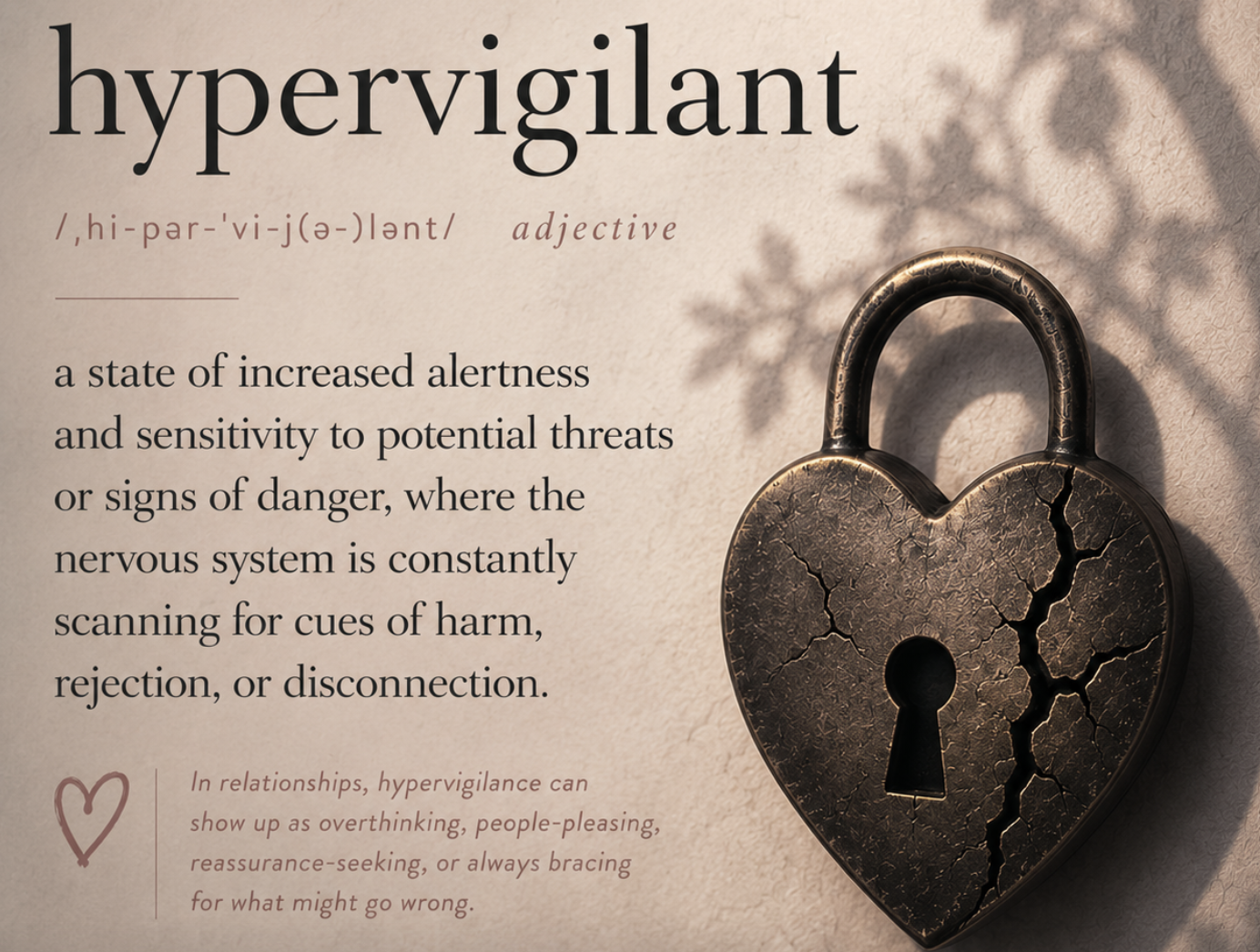
Relational anxiety can shape the way we communicate, attach, interpret, pursue reassurance, avoid vulnerability, and make meaning in our relationships. Often, the nervous system develops deeply intelligent strategies to protect us from uncertainty, rejection, abandonment, shame, or disconnection. But over time, these protective strategies can unintentionally create more anxiety, more disconnection, and more suffering.
This 3-week educational workshop series explores the fundamentals of relational anxiety, obsessions, and compulsions, and how to build greater relational security through small, hard-earned, incremental daily actions. Rooted in nervous system awareness, mindfulness, and trauma-informed behavior change, this series is designed to help participants relate from a more grounded, values-aligned self, rather than from the voice of anxiety.
This workshop is intended to be inclusive both for individuals who identify with OCD or relational OCD, and for those who simply notice obsessive, compulsive, vigilant, or reassurance-seeking tendencies within themselves and their relationships.
Each session will include psychoeducation, guided self-inquiry, self-reflection practices, and optional self-directed home practices to support ongoing integration between sessions. Participants will have the option to use the chat function to engage with live workshop sessions.
This is not a therapy group or process group, but an educational and experiential space for learning, self-reflection, and community connection. Participants are encouraged to bring insights from the workshop back into their own therapy or personal healing work if desired. Having a support system outside of the workshop is recommended so that you can process what arises.
3 Fridays at 1-2pm
or follow at your own pace via recording:
Fri Sept 18 / Sept 25 / Oct 2
Together, we’ll explore:
• How the nervous system adapts in relationships, and how protective strategies can become anxiety loops.
• Patterns like reassurance-seeking, hypervigilance, avoidance, rumination, and other compulsive attempts to feel secure.
• Practices for tolerating uncertainty, acting with integrity, and building greater relational security.
• How to shift from being guided by relational fear to being guided by relational values.